From Southeast Asia to Canada: The Journey of Kratom
Industry · 11 min · 2026-04-18
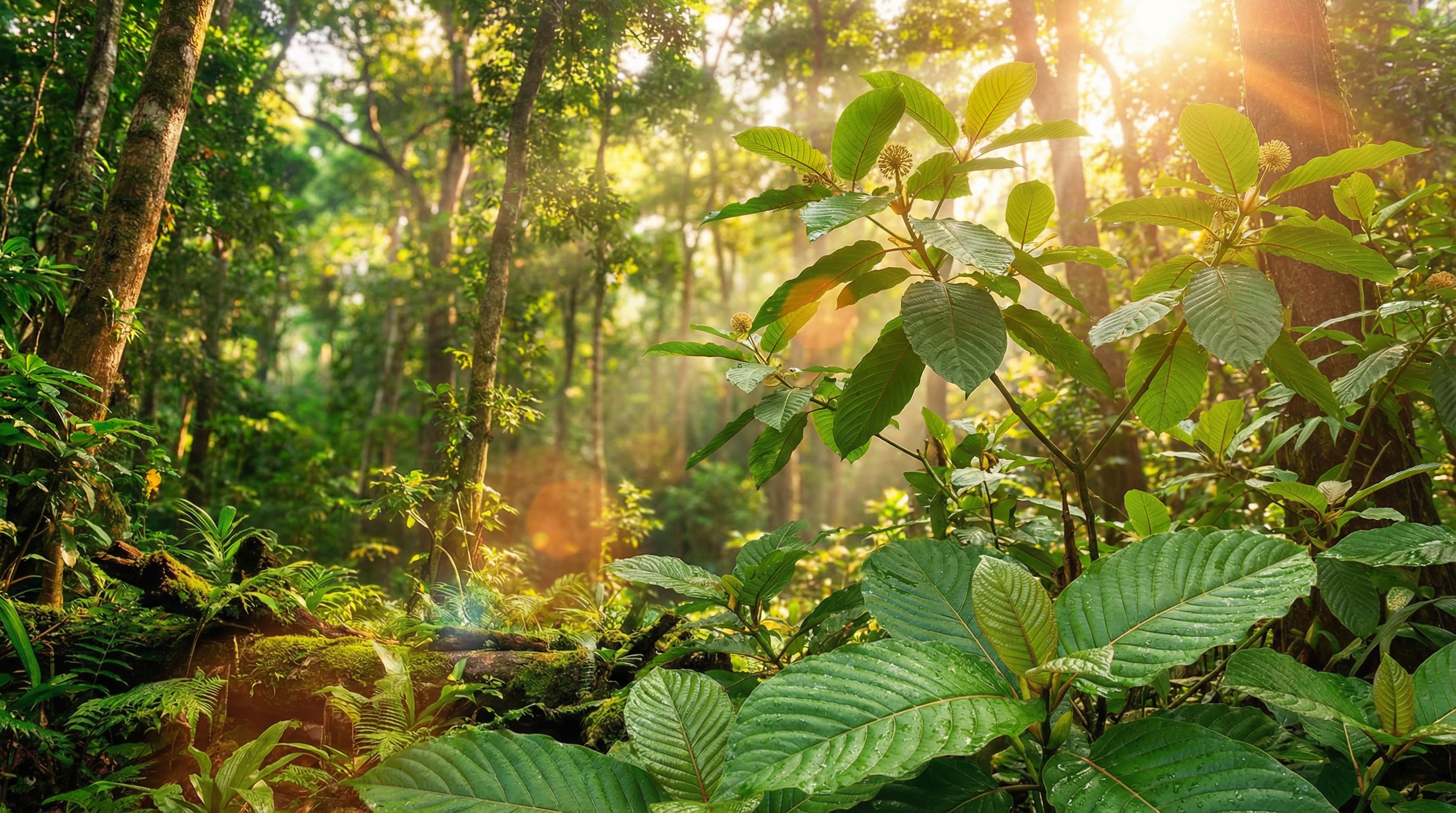
How kratom travels from tropical forests in Indonesia and Thailand to Canadian labs and customers — the supply chain, sourcing standards, and sustainability story.
# From Southeast Asia to Canada: The Journey of Kratom
The story of kratom spans centuries and continents, from the tropical forests of Southeast Asia to modern Canadian research laboratories and retail markets. Understanding this journey — from traditional use by indigenous communities to contemporary extraction science — provides essential context for anyone working with kratom alkaloids today. This article traces the complete path of kratom from its natural habitat to the [7OH North product line](/shop) available to Canadian researchers.
## Traditional Origins in Southeast Asia
Kratom (*Mitragyna speciosa*) has been used in Southeast Asian countries for centuries, with documented traditional use dating back at least 150 years. In Thailand, Malaysia, Indonesia, and Papua New Guinea, kratom leaves were traditionally chewed fresh by agricultural workers and labourers. The practice was deeply embedded in the daily routines of rural communities, particularly among those engaged in physically demanding work such as rice farming, rubber tapping, and fishing.
In Thailand, kratom is known locally as "กระท่อม" (krathom), while in Malaysia it is often called "ketum" or "biak-biak." Traditional preparation methods varied by region but typically involved chewing fresh leaves, brewing dried leaves into tea, or mixing powdered leaf with water. These methods delivered the full spectrum of kratom's 40+ alkaloids in their natural ratios.
The cultural significance of kratom in Southeast Asia cannot be overstated. In many communities, offering kratom tea to guests was a sign of hospitality, similar to the role of coffee or tea in Western cultures. Traditional knowledge about different kratom varieties, harvesting times, and preparation methods was passed down through generations.
## The Kratom Tree: Botanical Profile
*Mitragyna speciosa* is a tropical evergreen tree belonging to the Rubiaceae family — the same botanical family as coffee (*Coffea*), gardenia, and cinchona (the source of quinine). Under optimal conditions, kratom trees can reach heights of 25 metres with trunk diameters exceeding 90 centimetres. The leaves are large, dark green, and glossy, typically measuring 12-20 centimetres in length and 7-12 centimetres in width.
The tree thrives in the humid, tropical climate of equatorial Southeast Asia, where temperatures remain consistently warm (25-35°C) and annual rainfall exceeds 2,000 millimetres. It grows best in fertile, well-drained soil along riverbanks and in lowland forests — conditions that are difficult to replicate outside its native range.
Kratom leaves contain over 40 structurally diverse alkaloids, with mitragynine being the most abundant (typically 60-66% of total alkaloid content) and 7-hydroxymitragynine being one of the most pharmacologically significant. The alkaloid profile varies based on several factors:
- **Vein colour**: Red, green, and white vein varieties have different alkaloid ratios
- **Leaf maturity**: Younger leaves may have different concentrations than mature leaves
- **Growing region**: Soil composition, altitude, and climate affect alkaloid production
- **Harvest season**: Alkaloid concentrations can fluctuate throughout the year
## Modern Harvesting and Processing
Today, kratom is primarily cultivated in Indonesia, which accounts for an estimated 95% of the global kratom supply. The Indonesian provinces of West Kalimantan, Central Kalimantan, and South Kalimantan on the island of Borneo are the largest production regions. Smaller quantities are produced in Sumatra, Sulawesi, and other Indonesian islands.
Modern harvesting follows a more systematic approach than traditional methods. Experienced harvesters select mature leaves based on size, colour, and vein characteristics. After harvesting, the leaves undergo a multi-step processing sequence:
1. **Washing**: Fresh leaves are thoroughly washed to remove dirt, insects, and surface contaminants
2. **Drying**: Leaves are dried using controlled methods — either indoor drying racks or outdoor sun-drying, depending on the desired end product
3. **Grinding**: Dried leaves are mechanically ground into a fine powder
4. **Sifting**: The powder is sifted to remove stems and coarse particles
5. **Packaging**: Finished powder is vacuum-sealed for export
The drying method significantly affects the final alkaloid profile. Indoor drying tends to preserve more of the original alkaloid content, while prolonged sun exposure can promote the oxidation of mitragynine to 7-hydroxymitragynine, which is why some red-vein products have higher 7-OH concentrations.
## The Extraction Revolution
While traditional kratom use involved consuming whole-leaf material, modern science has made it possible to isolate specific alkaloids with remarkable precision. The extraction of 7-hydroxymitragynine represents a significant advancement in kratom science.
The extraction process typically involves:
- **Solvent extraction**: Raw kratom powder is treated with food-grade solvents to dissolve the alkaloid fraction
- **Liquid-liquid partitioning**: The crude extract is further refined to separate alkaloid groups
- **Chromatographic purification**: High-performance liquid chromatography (HPLC) isolates 7-OH from other alkaloids
- **Crystallization**: The purified compound is crystallized to pharmaceutical-grade purity
This technology enables products like [7OH North's Pure 7-OH Labs tablets](/product/pure-7oh-labs-blue-raz) to deliver precise, standardized amounts of 7-hydroxymitragynine — something that would be impossible with whole-leaf material alone.
## 7OH North's Supply Chain: From Source to Tablet
At [7OH North](/about), we have built a transparent, quality-controlled supply chain that connects Southeast Asian kratom cultivation with Canadian research needs:
1. **Sourcing**: We work directly with trusted suppliers in Indonesia who follow sustainable harvesting practices and fair labour standards
2. **Extraction**: Raw materials are processed by extraction partners using pharmaceutical-grade equipment
3. **Testing**: Every batch undergoes [comprehensive third-party lab testing](/blog/importance-of-lab-testing) for alkaloid content, heavy metals, microbial contamination, and pesticide residues
4. **Manufacturing**: Purified 7-OH is formulated into tablets with precise dosing
5. **Import**: Finished products are legally imported into Canada in compliance with all federal regulations
6. **Distribution**: Products are shipped to Canadian customers with full documentation including Certificates of Analysis
This end-to-end approach ensures that every [7OH North product](/shop) — whether it is our [7 Daze Perk Ups](/product/7-daze-lemon-tang), [Bare Kratom Shots](/product/bare-kratom-shots-blue-razz), or [Seven Naturals 150mg](/product/seven-naturals-150mg) — can be traced back to its source material.
## Sustainability and Ethical Sourcing
As the global demand for kratom grows, sustainability becomes increasingly important. Kratom trees are a renewable resource when managed responsibly — they can be harvested repeatedly without killing the tree, and mature trees produce leaves for decades.
7OH North is committed to ethical sourcing practices. We prioritize suppliers who maintain sustainable harvesting rotations, support local communities through fair wages, and protect the biodiversity of the forests where kratom grows naturally.
Explore our full range of sustainably sourced [7-OH products](/shop) and learn more about our commitment to quality on our [About page](/about).
*All 7OH North products are sold for research purposes only. Not for human consumption.*